Home
Home
|
|
Home
|
|
Biography
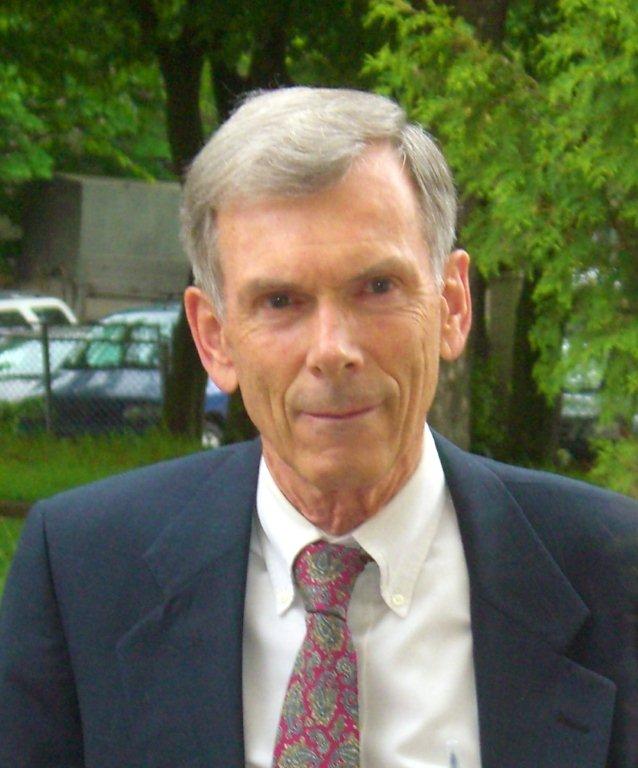
Dr. John C. Munday Jr. began his career as a research scientist, developed policy interests as a result of environmental research, and has taught environmental and science policy courses during 50 years of teaching and research. He served in graduate and undergraduate school administrative roles for 27 years. He presently is writing and editing books on science and environment, and doing some adjunct teaching. His most recent full-time academic appointment was as Professor of Natural Sciences in the College of Arts and Sciences, Regent University, Virginia Beach, Virginia, during the years 2006-2014. From 2007 to 2012, he served as Chair of the Department of Natural Science, Mathematics, and Technology. During 1983-1999, he was Professor of Public Policy in the Robertson School of Government at Regent. In 2004-2007 Dr. Munday taught physics and physical science in a home school co-op. In May, 2016, Dr. Munday was honored by Regent University with the status of Professor Emeritus. Dr. Munday grew up in Cranford, New Jersey, benefiting from its excellent public schools, and enjoying extracurricular sports (cross-country and track), Scouting (Eagle Scout, including Explorer level; he attended National Jamborees in California 1953 and Valley Forge 1957) and music activities locally and in the region including nearby New York City. He received 10 years of training in classical piano; his mother was a piano teacher and graduate of Julliard School of Music in NYC; John had a few years of training by his mother's Julliard teacher. He was valedictorian of his senior class. He graduated with a B.A. from Cornell University majoring in physics. He obtained a PhD in biophysics (details below). His father was a PhD in chemical engineering and had a career at Exxon in petroleum research; his brother was a PhD in inorganic chemistry and had a career with FMC, a major chemicals corporation; these influences defined his fundamental scientific and technological approaches to all the activities which have followed. His Ph.D. is in biophysics from the University of Illinois (1968), and his dissertation was on fluorescence transients of photosynthetic algae. During a postdoctoral year as a physicist working for the Air Force Missile Development Center at Holloman Air Force Base, Alamogordo, New Mexico, he improved techniques for remote detection of spectral radiation from reentry vehicles. In his research career following the Ph.D. and the postdoctoral year, he applied his knowledge of biophysics and remote sensing to environmental and natural resource issues, eventually leading to involvement with local, state and federal government, and finally to his joining Regent University's new thrust in government and public policy. During his career he has published more than 40 research articles and contributed to numerous books and conference proceedings on remote sensing and its applications. Before joining Regent University in 1983, as a charter member of the faculty of the School of Public Policy (as the Robertson School of Government was then called), Dr. Munday for 10 years was a faculty member (reaching full professor) and research scientist at the School of Marine Science (Virginia Institute of Marine Science), College of William and Mary. His work there focused on remote sensing of environment, particularly water quality in the coastal zone. Like other scientists at VIMS, a state-funded research and educational facility, Dr. Munday performed grant and contract research with significant government policy applications. Among other projects, he was principal investigator on contracts from NASA and the Virginia Commonwealth Data Base applying remote sensing to land use and water quality issues in the coastal zone, including oil spill behavior, outfall siting in Hampton Roads, algal blooms in the Chesapeake Bay, and land use mapping for several planning district commissions. Dr. Munday also spent 4 years with the Department of Geography, University of Toronto. His research focused on remote sensing of water quality. With support from the (then) Canada Centre for Inland Waters and the Canada Centre for Remote Sensing, he developed the chromaticity method for determining suspended sediment concentrations using Landsat data. The method was implemented as a standard utility at CCRS, and has been used by investigators both at CCRS and at other remote sensing centers around the world. From 1983 to 1999 in the Robertson School of Government at Regent University, he served as Assistant Dean (1985-88), Associate Dean (1988-93, 1996-1997), and Interim Dean (1993-96). His teaching responsibilities during 1983-1999 included courses on Biblical foundations of natural science with applications to science and technology issues, natural resource and environmental policy, war and peace issues, and policy analysis and quantitative methods. One theme in his writing has been Bible-science issues with application to science education policy (for a picture of his theological viewpoints, see "Creature Mortality: From Creation or the Fall?," J. Evangelical Theological Society 35/1 (March 1992) 51-68, and "Eden's Geography Erodes Flood Geology," Westminster Theological Journal 58 (1996) 123-154). Another theme has been inalienable rights and their relation to environmental and natural resource issues, published at meetings of the American Scientific Affiliation, a network of Christians in science. He served in RSG as Adjunct Professor during 1999-2001 and 2018-2020, teaching American political thought and Christian foundations of government. In 2003-2004, for geologist William Hutton and computer/research specialist Jonathan Eagle, Dr. Munday edited and contributed to a 598-page book on Earth's Catastrophic Past and Future (2004), available through http://www.uPublish.com. In 2011, as editor he assembled the 600-page autobiography of John McConnell, the well-known environmental activist who founded Earth Day, and who until his death in 2012 at age 97 resided in Denver. The title is Earth Day: Peace, Justice and Earth Care: My Life and Thought at Age 96, Wipf and Stock, Eugene, OR, available through http://www.wipfandstock.com/. In 1994, he was appointed by Governor Allen of Virginia to the Governor's Advisory Council on Self-Determination and Federalism. He drafted the report of the Council's Subcommittee on Unfunded Mandates. In the 1990s he was a member of the Advisory Committee of the National Council on Bible Curriculum in Public Schools (Greensboro, North Carolina). He was appointed to the Wetlands Board in Chesapeake, Virginia, in 1995 (elected Vice-Chairman in 1998; elected Chairman in 2003). He retired from the Wetlands Board in 2005. In 1996 he was appointed by Governor Allen to the Virginia Pesticide Control Board, and re-appointed by Governor Gilmore in 2001, and chaired the Awards Committee and the Enforcement Committee. He retired from the Pesticide Control Board in 2004. He is a 50-year member of the American Association for the Advancement of Science and a 36-year member of the American Scientific Affiliation, a network of Christians in science. His memberships have included the American Society for Photogrammetry and Remote Sensing, the International Association for Energy Economics, and the Association of American Geographers. He is a member of Sigma Xi, a national scientific honorary society. John has been a runner for many decades, ever since high school and college cross-country and track. He has completed 14 marathons (Boston 3x, NYC 3x) and 28 half-marathons, plus many other shorter races. John has also been active vocationally as a musician over the years. In college he began playing the guitar, and in grad school added banjo and autoharp, composing music for each. He was president of the Campus Folksong Club at the University of Illinois in 1965-66. He has composed folksongs, love songs, Scripture worship songs, and classical ragtime piano pieces (12 pieces, one for each key and for each month of the year). Some of the music has been published on Facebook and on Sound Cloud.
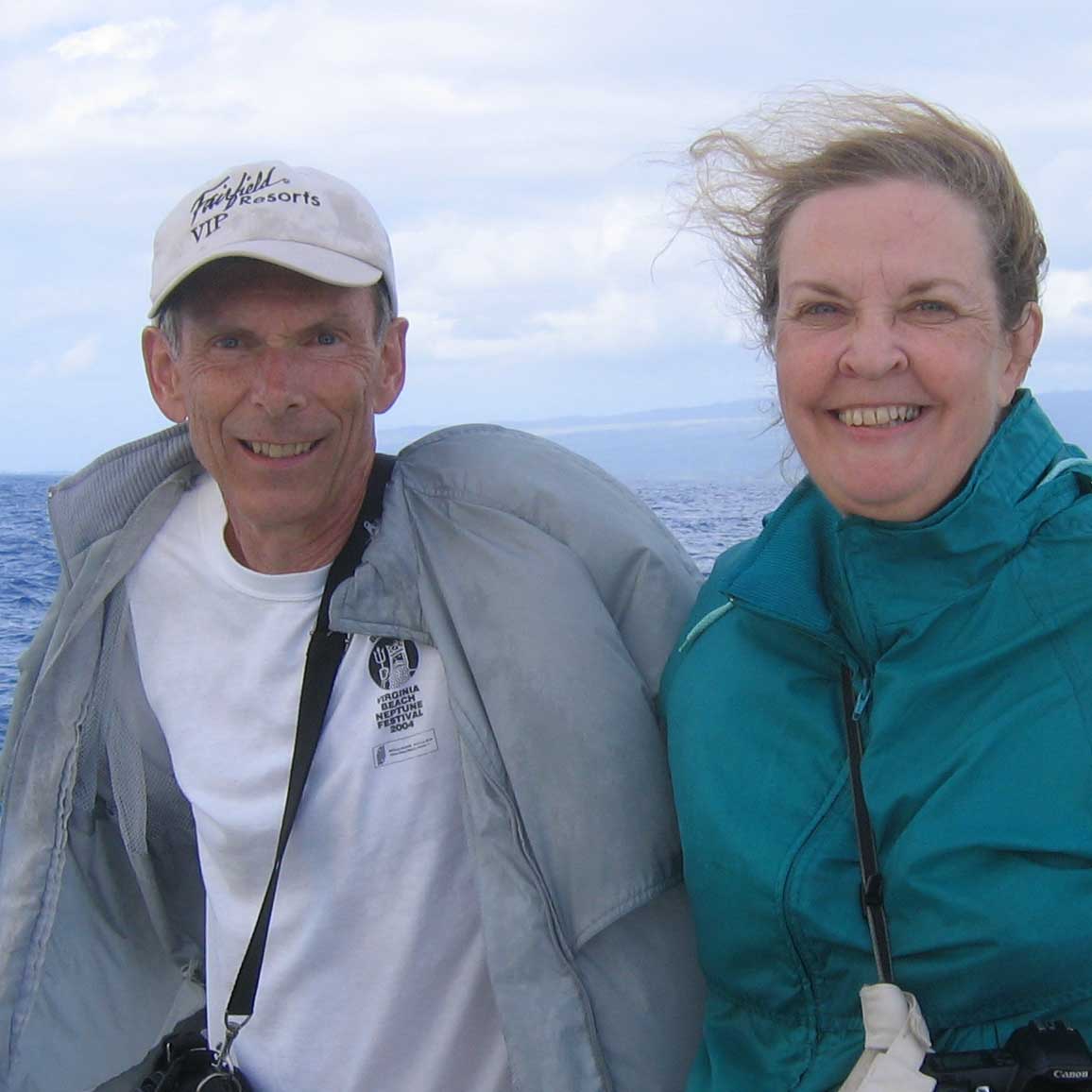
Dr. Munday has been married for nearly 56 years to Judith Berrien Munday, M.Ed., M.A., an educator with a specialty in learning disabilities and special educational needs. She taught in the Chesapeake, Virginia public shools for 10 years. Mrs. Munday also taught in Hampton Christian Schools and Mary Atkins Christian School in Hampton, Virginia, and in other private schools in Gloucester County, Virginia, serving as Headmistress and teacher. For information concerning her special education consulting and tutoring services, and her book on Teaching a Child with Special Needs at Home and at School, see http://www.helpinschool.net (Dr. Munday originated her website). She is devoted to the Lord, her husband and family, and to school children with learning disabilities and special educational needs. In 1988 Dr. and Mrs. Munday jointly authored "Exploring Creation Life Science" (CBN Publishing), an instructional manual used by homeschoolers, teachers and students at elementary and junior high levels. Dr. and Mrs. Munday live in Chesapeake, Virginia, and presently attend Great Bridge Presbyterian Church. Over the years as a Christian he has served as an elder, teacher, worship leader, organist and pianist, and led home groups. They have 3 children (all married), and 6 grandsons and 4 granddaughters. All have vacationed together in Rocky Mountain National Park in Colorado and Grand Canyon National Park, enjoying tent camping and backpacking. John and Judi backpacked in RMNP in Colorado for their belated honeymoon in 1966 and have frequently camped in RMNP ever since. They have especially enjoyed 4 visits to Hawaii. |
|
Home
|